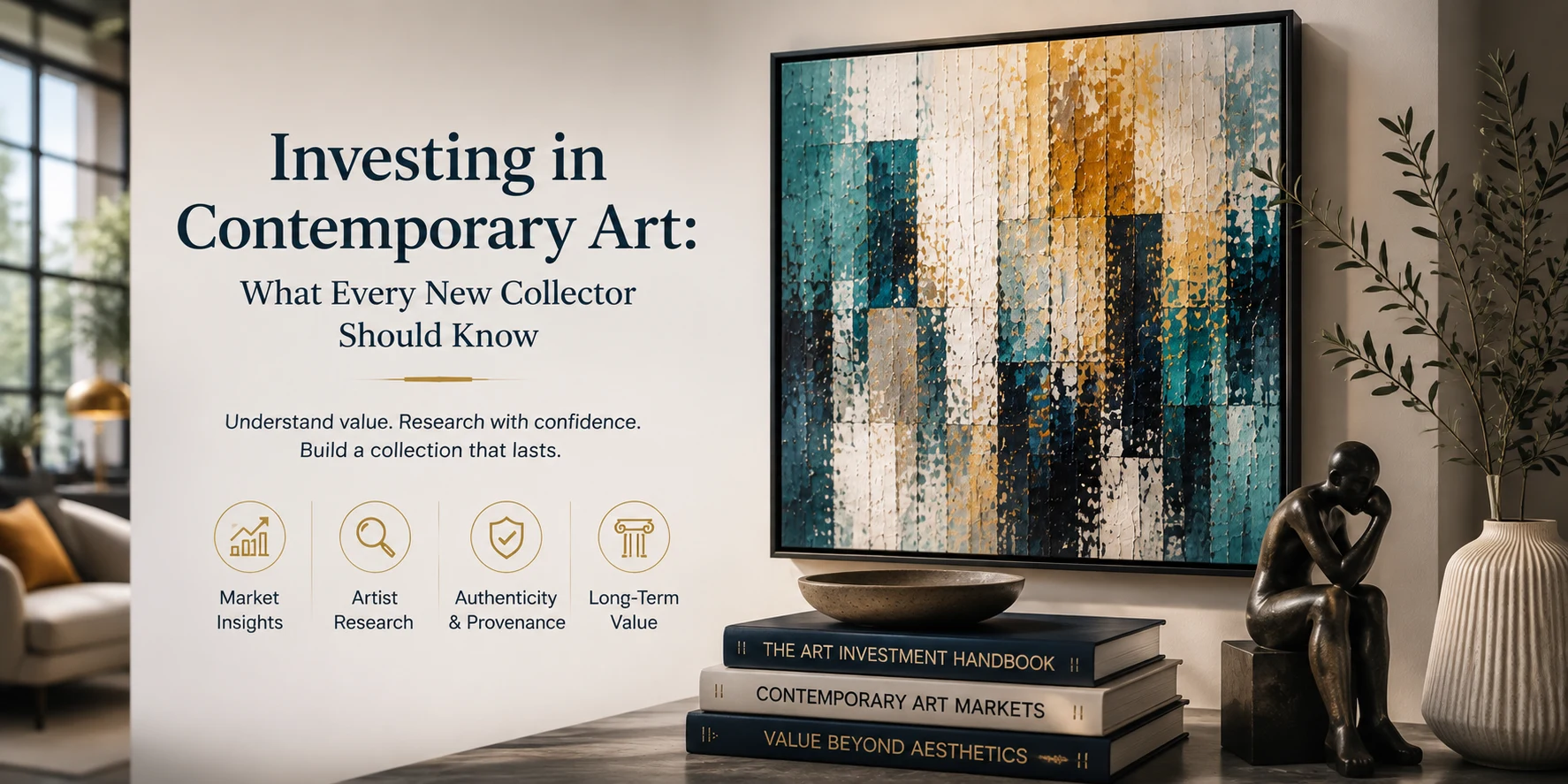
Contemporary art has become an increasingly important part of the global art market, attracting collectors, cultural institutions, galleries, and art enthusiasts from around the world. For some collectors, purchasing an original painting is primarily an emotional decision. For others, contemporary art can also represent an opportunity to own a culturally significant asset that may appreciate over time.
However, investing in contemporary art is very different from investing in traditional financial markets. There are no guaranteed returns, and the value of an artwork can be influenced by many factors, including the artist’s reputation, exhibition history, demand, cultural relevance, and the broader art market.
For new collectors, the best approach is to combine genuine appreciation for art with careful research and a long-term perspective.
This guide explores what you should know before considering contemporary art as part of your collecting journey.
What Does It Mean to Invest in Contemporary Art?
Investing in contemporary art means acquiring original artworks with the expectation that they may retain or increase their value over time.
However, art investment is not simply about buying a painting and waiting for its price to rise.
An artwork can have several different types of value.
It can have:
- Emotional value
- Aesthetic value
- Cultural value
- Historical value
- Artistic value
- Market value
For most private collectors, these forms of value overlap.
A painting may be financially valuable, but its personal meaning may be even more important to its owner.
This is why successful art collecting usually begins with appreciation rather than speculation.
Is Contemporary Art a Good Investment?
Contemporary art can become a valuable asset, but there is no guarantee that every artwork will increase in price.
The market for individual artists can change significantly over time.
An emerging artist may become internationally recognised, increasing demand for their work. Another artist may remain respected within a smaller artistic community without experiencing significant price growth.
For this reason, contemporary art should generally be approached as a long-term collecting activity rather than a way to make quick profits.
The strongest strategy for a new collector is to purchase artwork that they genuinely appreciate while also researching the artist and the broader context of the work.
Why Do Collectors Buy Contemporary Art?
People collect contemporary art for many different reasons.
Some collectors are attracted to the emotional impact of a painting.
Others want to support living artists and contribute to the development of contemporary culture.
Some enjoy building collections around particular themes, artistic movements, or techniques.
Others are interested in the potential long-term value of the artworks they acquire.
In reality, most serious collectors combine several motivations.
The possibility of financial appreciation may be interesting, but living with an artwork and developing a personal connection to it can be one of the greatest rewards of collecting.
What Determines the Value of Contemporary Art?
There is no single formula for determining the value of an artwork.
Several factors can influence the market value of a contemporary painting.
The Artist’s Reputation
An artist’s reputation is one of the most important factors.
Recognition can develop through exhibitions, gallery representation, publications, awards, institutional attention, and critical discussion.
As an artist’s career develops, demand for their work may change.
Exhibition History
An artist who has participated in respected exhibitions may have stronger visibility within the art community.
Exhibition history can provide useful context when researching an artist’s career.
Artistic Quality
The quality and originality of the artwork itself are also important.
Collectors may consider the composition, technique, materials, subject matter, and relationship of the work to the artist’s broader practice.
Scarcity
Original paintings are inherently unique.
However, the number of works an artist creates and the availability of their artwork can also influence demand.
A particularly significant work from an artist’s career may become especially desirable to collectors.
Demand
The relationship between supply and demand can influence the market for an artist’s work.
When more collectors become interested in an artist while the number of available works remains limited, prices may increase.
However, demand can change, which is why art should not be treated as a guaranteed financial asset.
Emerging Artists and Art Investment
One of the most exciting aspects of contemporary art is discovering emerging artists.
An emerging artist may not yet have the international recognition of an established name, but their work can offer originality, experimentation, and a distinctive artistic voice.
For collectors, discovering an emerging artist early can be particularly rewarding.
However, emerging artists also involve greater uncertainty.
There is no guarantee that an artist’s market will grow.
Therefore, the best reason to collect an emerging artist is that you genuinely believe in and appreciate their work—not simply because you expect their prices to rise.
Established Artists vs Emerging Artists
Both established and emerging artists can have a place in a contemporary art collection.
Established artists may offer:
- A longer exhibition history
- Greater market recognition
- A more developed artistic practice
- More extensive documentation
- An established collector base
Emerging artists may offer:
- New creative perspectives
- Greater experimentation
- Opportunities to discover artists early
- Potentially more accessible entry prices
A diversified personal collection can include both.
The choice depends on your interests, budget, and collecting goals.
Buy the Artist, Not Just the Artwork
One useful principle for collectors is to look beyond a single painting.
Research the artist’s complete body of work.
Look at how their style has developed.
Understand the themes they explore.
Study their exhibitions and professional activities.
Ask yourself whether you believe the artist has a distinctive creative voice.
An artwork can be beautiful, but understanding the artist’s wider practice can help you make a more informed collecting decision.
The Importance of Authenticity
Authenticity is essential when purchasing original art.
A collector should have confidence that the artwork is genuinely created by the artist.
When buying from an established gallery or directly from an artist, ask what documentation accompanies the artwork.
Depending on the artist and artwork, this may include a certificate of authenticity or other documentation identifying the work.
Important details may include:
- Artist’s name
- Artwork title
- Date of creation
- Medium
- Dimensions
- Signature
- Gallery information
Keep all documentation associated with the purchase.
It becomes part of the artwork’s history.
Provenance and Why It Matters
Provenance refers to the documented history of an artwork.
For contemporary art, provenance may initially be relatively simple.
For example, a painting may have been purchased directly from the artist and later transferred to a private collector.
As the artwork changes ownership or appears in exhibitions, its documented history can become more extensive.
Good records help establish the history of a work and can become increasingly useful over time.
Why Buying From a Reputable Gallery Matters
For new collectors, working with a reputable gallery can provide valuable confidence.
A professional gallery can help you understand:
- The artist’s background
- The artwork’s history
- Materials and techniques
- Authenticity
- Pricing
- Exhibition history
- Care and preservation
A gallery can also introduce you to artists whose work fits your interests.
Rather than simply selling a painting, a good gallery helps create a connection between artist and collector.
Do Not Buy Art Only Because You Expect the Price to Rise
One of the biggest mistakes a new collector can make is treating art like a short-term financial trade.
The art market is influenced by cultural trends, collector preferences, economic conditions, institutional recognition, and many other factors.
An artwork that increases in value may take many years to do so.
Another work may remain stable in value.
Some may even decline in market demand.
Therefore, never purchase an artwork you dislike simply because someone tells you it will become more valuable.
If the market does not develop as expected, you should still be happy to own the painting.
Think Long Term
Art collecting is generally better suited to a long-term perspective.
Instead of asking:
“How much will this painting be worth next year?”
Consider asking:
“Would I be happy to own this painting for the next ten years?”
This change in perspective can lead to better collecting decisions.
A meaningful collection develops gradually.
As you learn more about artists and contemporary art, your preferences will become clearer.
Build a Collection Around Ideas
Some of the most interesting private collections have a clear sense of connection.
You might collect artworks around:
- Identity
- Nature
- Memory
- Human relationships
- Abstract expression
- Colour
- Cultural heritage
- Contemporary life
The artworks do not need to look identical.
Instead, they can create a visual conversation.
One painting may respond to another through colour, theme, composition, or emotion.
This gives the collection a sense of identity.
Keep Your Art Collection Documented
Professional documentation is an important part of responsible collecting.
For every artwork, consider keeping records of:
- Artist
- Title
- Year
- Medium
- Dimensions
- Purchase date
- Purchase price
- Gallery or seller
- Certificate of authenticity
- Exhibition history
- Photographs
Digital copies should also be stored securely.
Good documentation protects the history of your collection and makes future management easier.
Take Care of Your Investment
An artwork’s condition can affect both its aesthetic and potential market value.
Original paintings should be displayed in an appropriate environment.
Avoid exposing artwork to:
- Direct sunlight
- Excessive humidity
- Extreme temperature changes
- Smoke
- Dust
- Water
The appropriate care depends on the materials used by the artist.
When purchasing an original painting, ask the gallery or artist about recommended display and conservation conditions.
Art Should Be Enjoyed, Not Just Stored
One of the great advantages of collecting art is the opportunity to live with it.
A painting does not have to remain hidden in storage.
When properly displayed, it becomes part of your everyday environment.
You may discover new details months or years after purchasing it.
Your interpretation of the artwork may also change as your own experiences change.
This is one of the qualities that makes collecting art fundamentally different from many other forms of investment.
How to Begin Your Art Investment Journey
If you are considering your first contemporary art purchase, start with education.
Visit galleries.
Attend exhibitions.
Follow artists.
Read about contemporary art.
Talk to gallery professionals.
Compare different artworks.
Most importantly, develop your own taste.
You do not need to become an art market expert before buying your first painting.
You simply need to approach the process with curiosity and care.
Contemporary Art at Soheila Golestani Gallery
At Soheila Golestani Gallery, contemporary painting is approached as a form of personal and emotional expression.
Soheila Golestani’s original artworks explore themes connected to colour, emotion, memory, identity, and human experience.
For collectors, discovering an artist’s individual visual language is an important part of building a meaningful collection.
An original painting is not simply a financial asset.
It is a physical expression of an artist’s creative journey.
When a collector connects with that vision, the artwork can become a lasting part of their personal environment and collection.
For those exploring contemporary art, discovering the work of a living artist can be the beginning of a long-term relationship with both art and creativity.
A Practical Checklist for Contemporary Art Collectors
Before purchasing an artwork with collecting or investment potential, consider the following questions:
- Do I genuinely like the artwork?
- Do I understand the artist’s practice?
- Is the artwork original?
- Is its authenticity documented?
- What is the artist’s exhibition history?
- Is the artwork representative of the artist’s work?
- Is the price appropriate for my budget?
- Do I understand the artwork’s materials?
- Can I properly display and care for it?
- Would I be happy to own it even if its market value did not increase?
The final question is perhaps the most important.
If you can answer yes, you may have found an artwork worth collecting.
Frequently Asked Questions
Is contemporary art a good investment?
Contemporary art can potentially appreciate in value, but returns are not guaranteed. Collectors should consider personal enjoyment, artistic quality, authenticity, and the artist’s career alongside any potential financial value.
Which contemporary artists are worth investing in?
There is no reliable list of artists guaranteed to increase in value. Instead, collectors should research artists with distinctive practices, professional development, exhibition history, and growing recognition.
Is it better to buy established or emerging artists?
Both can be valuable additions to a collection. Established artists may offer greater market recognition, while emerging artists can provide opportunities to discover new creative voices.
How much should I invest in contemporary art?
There is no universal amount. Set a budget that is financially comfortable and avoid spending money you cannot afford to have tied up for a long period.
Can an original painting lose value?
Yes. The market value of an artwork can decrease depending on demand, the artist’s reputation, market conditions, and other factors.
Should I buy art only as an investment?
It is generally wiser to purchase artwork you genuinely appreciate. This way, the painting retains personal and aesthetic value regardless of future market performance.
Final Thoughts
Investing in contemporary art can be an exciting and rewarding part of building a personal collection, but it should be approached with patience, research, and realistic expectations.
There is no formula that guarantees that a particular painting will increase in value. The contemporary art market is constantly evolving, and the future success of individual artists cannot be predicted with certainty.
For this reason, the most sustainable approach is to collect art you genuinely love while learning about the artists, their careers, and the context surrounding their work.
A successful collection is not simply a group of expensive objects.
It is a reflection of curiosity, personal taste, cultural appreciation, and meaningful experiences.
Whether you are purchasing your first original contemporary painting or expanding an established collection, take your time, ask questions, visit galleries, and allow your relationship with art to develop naturally.
The greatest reward of collecting may ultimately be the opportunity to live with original creativity and discover new meaning in it for years to come.