
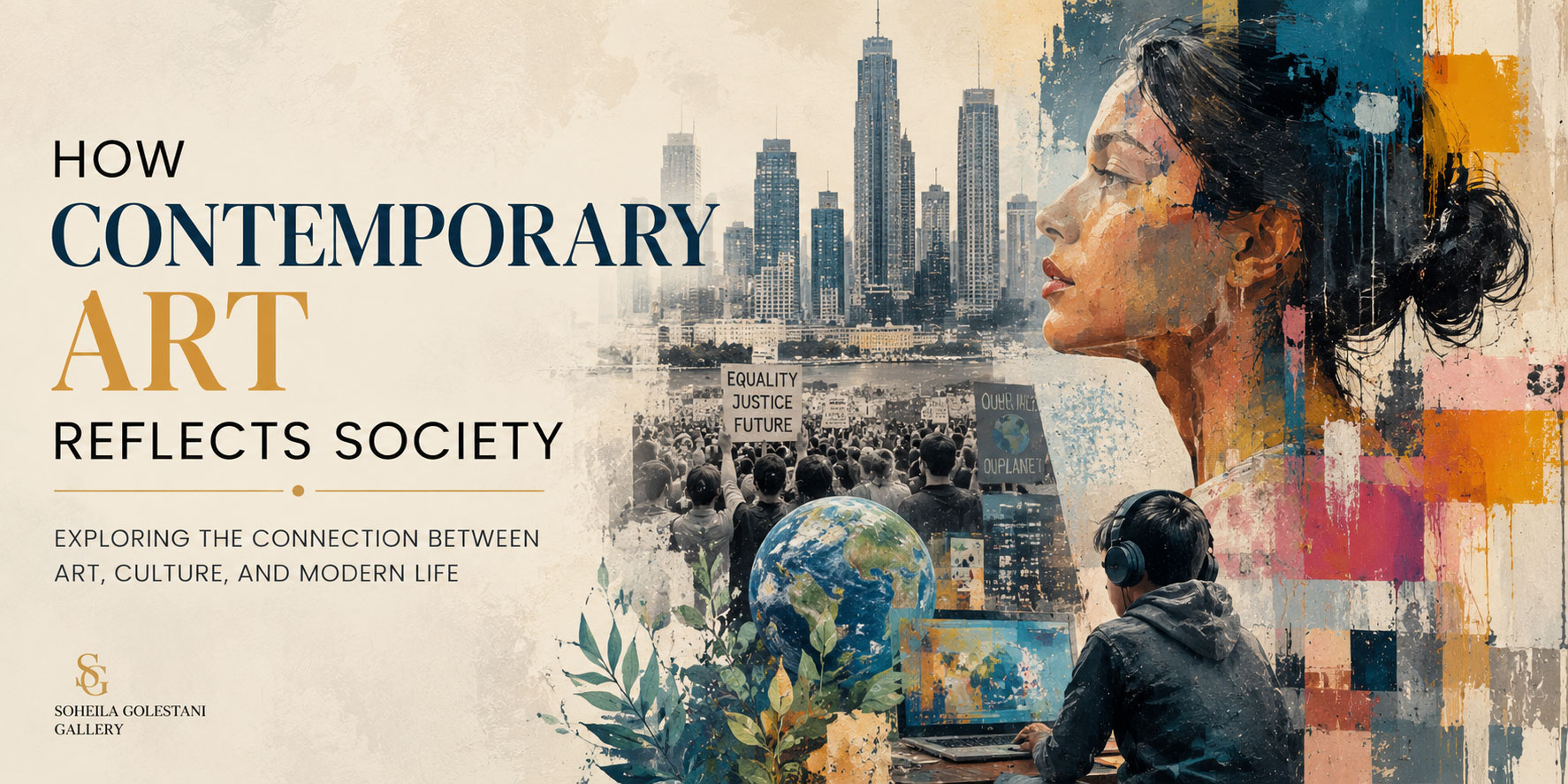
How Contemporary Art Reflects Society
Art has always served as a mirror of civilization. Throughout history, artists have documented the values, beliefs, conflicts, and dreams of their time. Today, contemporary art continues this tradition by capturing the complexity of modern life through innovative ideas, diverse materials, and deeply personal perspectives.
Unlike traditional artistic movements that focused primarily on religion, mythology, or historical events, contemporary art responds directly to the world we live in. It explores issues such as identity, technology, environmental concerns, migration, equality, and emotional wellbeing.
Rather than providing clear answers, contemporary artists encourage viewers to ask questions, reflect on their own experiences, and engage in meaningful conversations.
This ability to create dialogue is one of the reasons contemporary art remains one of the most influential forms of creative expression today.
What Does It Mean for Art to Reflect Society?
Art reflects society by expressing the emotions, challenges, and aspirations of a particular moment in history.
Every generation produces artwork that documents its own experiences.
During the Renaissance, artists celebrated religion and humanism.
Modern artists questioned tradition and experimented with abstraction.
Today, contemporary artists examine the realities of living in an interconnected and rapidly changing world.
Their work often explores subjects that affect millions of people, making contemporary art both highly personal and universally relevant.
Contemporary Art as a Mirror of Modern Culture
Culture is constantly evolving.
New technologies emerge.
Social values shift.
Global communication connects distant communities.
Artists naturally respond to these transformations.
Contemporary art reflects cultural diversity by embracing multiple viewpoints rather than promoting a single artistic style.
Because artists come from different backgrounds and life experiences, contemporary art has become one of the richest visual records of modern society.
It reminds us that there is no single story capable of representing today’s world.
Identity: One of the Defining Themes of Contemporary Art
Questions of identity have become central to contemporary artistic practice.
Artists explore topics including:
- Personal identity
- Gender
- Ethnicity
- Migration
- Family history
- Memory
- Belonging
Instead of creating idealized portraits, many contemporary painters reveal the emotional complexity of being human.
Their work encourages audiences to consider how identity is shaped by both personal experiences and the societies in which we live.
Contemporary Art and Social Change
Throughout history, artists have often challenged established ideas.
Contemporary artists continue this tradition by addressing important social issues such as:
- Equality
- Human rights
- Cultural diversity
- Freedom of expression
- Refugee experiences
- Mental health
- Social justice
Art has the unique ability to communicate these subjects without relying solely on language.
Through symbolism, color, composition, and visual storytelling, artists invite viewers to see familiar issues from new perspectives.
Rather than delivering political statements, contemporary artworks often encourage empathy and understanding.
Technology’s Influence on Contemporary Art
Technology has fundamentally transformed the way artists create and audiences experience art.
Today, contemporary artists work across numerous media, including:
- Painting
- Digital illustration
- Photography
- Video
- Artificial intelligence
- Interactive installations
- Virtual reality
Technology is not only a creative tool but also an important subject within contemporary art.
Many artists examine how smartphones, social media, artificial intelligence, and digital communication influence relationships, identity, and everyday life.
This makes contemporary art especially relevant in the twenty-first century.
Environmental Awareness Through Art
One of the most urgent global conversations today concerns the environment.
Many contemporary artists respond to climate change, pollution, sustainability, and biodiversity through their work.
Some create installations using recycled materials.
Others paint landscapes transformed by environmental change.
These artworks encourage audiences to think about humanity’s relationship with nature and the responsibility we share for protecting it.
The Emotional Power of Contemporary Painting
Painting remains one of the most expressive forms of contemporary art.
Through texture, movement, color, and composition, artists communicate emotions that are often difficult to express with words.
A single painting can evoke hope, loneliness, resilience, nostalgia, or uncertainty.
Every viewer experiences these emotions differently.
This openness to interpretation is one of the defining characteristics of contemporary painting.
Rather than explaining everything, the artwork invites personal reflection.
Why Contemporary Art Sometimes Feels Difficult to Understand
Many people believe contemporary art is intentionally confusing.
In reality, contemporary art often asks viewers to become active participants.
Unlike traditional paintings that tell straightforward stories, contemporary artworks frequently explore ideas through symbolism and metaphor.
There may be many valid interpretations rather than one correct answer.
This freedom allows every visitor to bring their own experiences into the conversation.
Understanding contemporary art becomes less about finding the “right” meaning and more about asking meaningful questions.
Art Galleries as Spaces for Dialogue
Contemporary galleries are much more than exhibition spaces.
They create opportunities for artists and audiences to meet through shared experiences.
Visitors discover new ideas.
Collectors support living artists.
Communities engage in cultural conversations.
Galleries also preserve creativity for future generations while introducing emerging artistic voices to wider audiences.
They play an essential role in ensuring that contemporary art remains accessible, relevant, and alive.
Contemporary Art at Soheila Golestani Gallery
At Soheila Golestani Gallery, contemporary painting is explored as a language of emotion, memory, and personal experience.
Each original artwork reflects the belief that art is not only something to observe but something to feel.
Through expressive compositions, rich textures, and thoughtful use of color, Soheila Golestani’s paintings invite viewers to form their own emotional connections and interpretations.
Rather than offering fixed narratives, the artworks create space for reflection, dialogue, and imagination—qualities that define the very essence of contemporary art.
Whether you are an experienced collector or discovering original contemporary paintings for the first time, engaging with art becomes an opportunity to better understand both the world around us and ourselves.
Frequently Asked Questions
How does contemporary art reflect society?
Contemporary art reflects society by responding to current cultural, political, environmental, and emotional issues through creative visual expression.
Why is contemporary art important today?
It encourages dialogue, represents diverse perspectives, and documents the experiences shaping modern life.
Does contemporary art always have a social message?
No. While many artists address social issues, others focus on personal memory, emotion, spirituality, beauty, or abstraction.
Why is contemporary painting still relevant?
Painting remains a powerful medium because it communicates human emotion and experience in deeply personal ways while continuing to evolve with modern society.
How can visiting an art gallery help people understand contemporary art?
Art galleries provide context, encourage interpretation, and allow visitors to experience original artworks in ways that digital images cannot replicate.
Final Thoughts
Contemporary art reflects society because it grows directly from the realities of our time. It records changing identities, celebrates cultural diversity, questions established beliefs, and gives visual form to the emotions that shape modern life.
Every painting, sculpture, installation, or digital artwork represents a conversation between the artist and the world around them. As society continues to evolve, contemporary artists will remain essential storytellers—capturing moments of transformation and inviting us to see familiar experiences through new perspectives. By exploring original contemporary paintings and supporting living artists, we become participants in this ongoing cultural dialogue. Art does not simply decorate our spaces; it deepens our understanding of the human experience and reminds us that creativity remains one of the most powerful ways to connect people across cultures and generations.