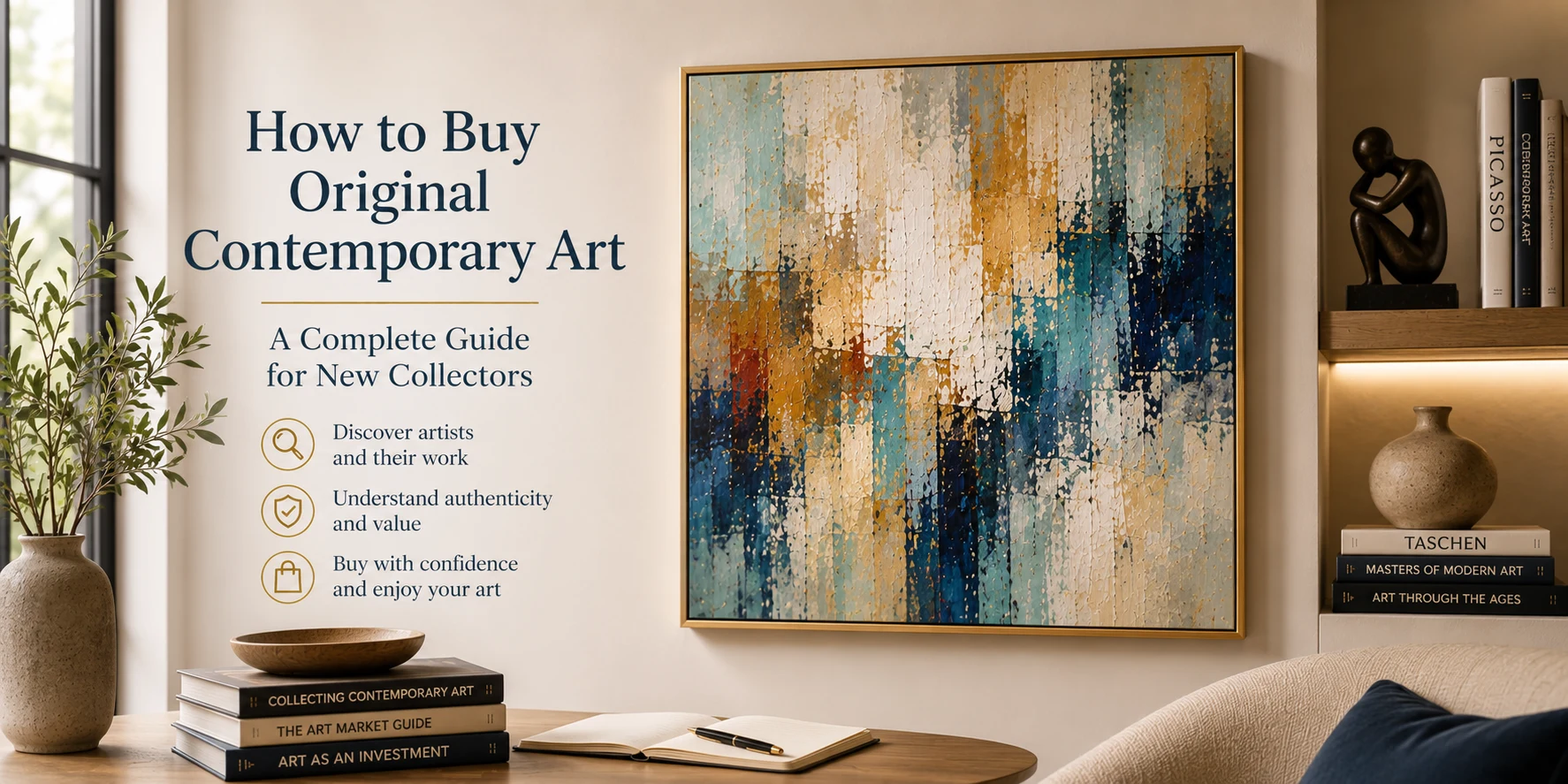
Buying an original contemporary painting is more than purchasing something beautiful for your home. It is an opportunity to connect with an artist’s creative vision, support original artistic work, and own a unique piece of contemporary culture.
For someone buying original art for the first time, however, the process can feel unfamiliar. How do you choose the right artist? What should you look for in a painting? How can you determine whether the price is reasonable? And what questions should you ask before making a purchase?
The good news is that you do not need to be an art expert to buy original contemporary art.
With curiosity, research, and a clear understanding of your own preferences, you can approach the process with confidence.
This guide explains the most important things to consider when buying original contemporary paintings, from discovering an artist to evaluating an artwork and making the final decision.
What Is Original Contemporary Art?
Contemporary art generally refers to art created by artists working in the present period. It encompasses a wide range of artistic approaches, including painting, sculpture, photography, installation, mixed media, and digital art.
When we talk about an original contemporary painting, we mean a unique artwork created directly by the artist rather than a reproduction or mass-produced decorative image.
An original painting contains the artist’s physical decisions, techniques, materials, and individual creative expression.
This uniqueness is one of the main reasons collectors value original artwork.
Start by Understanding What You Like
Before looking at prices or artists, think about your own taste.
You do not need to know the name of every artistic movement. Instead, pay attention to your emotional response.
Which paintings make you stop?
Which colours attract you?
Do you prefer calm compositions or energetic ones?
Are you drawn to abstract forms, expressive figures, landscapes, or symbolic imagery?
Your first purchase should ideally reflect something you genuinely appreciate.
The more art you see, the clearer your preferences will become.
Visit Art Galleries and Exhibitions
One of the best ways to discover original contemporary art is to see it in person.
Online galleries and social media can introduce you to artists, but photographs cannot fully communicate the physical presence of a painting.
When viewing artwork in a gallery, you can observe:
- Texture
- Brushwork
- Scale
- Colour
- Surface details
- Framing
- Materials
You can also understand how the artwork interacts with surrounding space.
This physical experience can completely change your perception of a painting.
A work that looks ordinary on a screen may become extraordinary when experienced in person.
Research the Artist
Once a painting captures your attention, learn more about the artist.
Research their background, artistic education, exhibitions, creative influences, and previous work.
More importantly, try to understand their artistic practice.
Ask:
What subjects does the artist explore?
What ideas influence their work?
How has their style developed?
What makes their approach distinctive?
Understanding the artist can transform your relationship with the artwork.
Instead of seeing only an attractive image, you begin to see the creative journey behind it.
Look at the Artist’s Body of Work
Do not judge an artist based on a single painting alone.
Explore several works whenever possible.
Look for recurring characteristics such as:
- Colour
- Composition
- Texture
- Subject matter
- Symbolism
- Technique
A consistent artistic language can reveal much more about an artist than an individual artwork.
It also helps you determine whether the artist’s work is something you want to live with for many years.
Choose Emotion Before Trends
Art trends can be influential, but they should not determine your personal collection.
A painting may be fashionable today and less popular in the future.
Your emotional connection to the artwork is much more personal.
Before purchasing, ask yourself:
“Would I still want to own this painting if nobody else knew it was valuable?”
If the answer is yes, you may have found an artwork worth considering.
Consider the Quality of the Artwork
When buying original art, examine the quality of the painting itself.
Look closely at:
- Surface texture
- Brushwork
- Composition
- Colour relationships
- Materials
- Finishing
- Framing
If you are viewing the artwork in person, take your time.
Look at it from different distances.
Observe the details.
Notice how the painting changes when viewed from across the room.
A strong original artwork often reveals new details over time.
Understand the Materials and Technique
Ask about the medium used to create the painting.
Contemporary artists may work with:
- Oil paint
- Acrylic
- Watercolour
- Mixed media
- Ink
- Charcoal
- Collage
- Experimental materials
Different materials have different characteristics and preservation requirements.
Understanding how an artwork was created can deepen your appreciation and help you care for it properly.
How Much Should You Spend on Original Art?
There is no universal price for an original painting.
The value of contemporary artwork can be influenced by many factors, including:
- The artist’s experience
- Reputation
- Exhibition history
- Demand
- Size
- Medium
- Complexity
- Uniqueness
- Gallery representation
For a new collector, the most important thing is to establish a budget before shopping.
Do not feel pressured to purchase artwork outside your financial comfort zone.
There are excellent contemporary artists at many different price levels.
Is Expensive Art Always Better?
No.
Price and artistic quality are not the same thing.
An expensive painting may reflect an artist’s established reputation, market demand, or extensive exhibition history, but a less expensive work by an emerging artist can still be deeply meaningful and artistically significant.
New collectors should focus on finding the right combination of quality, authenticity, personal connection, and price.
Buy Through a Reputable Gallery
A reputable art gallery can make the buying process much easier for new collectors.
Professional galleries can provide information about:
- The artist
- The artwork
- Materials
- Authenticity
- Provenance
- Exhibition history
- Pricing
- Care and preservation
They can also help collectors understand an artist’s broader practice and find works that suit their preferences.
A trusted gallery provides an additional layer of confidence when purchasing original art.
Ask About Authenticity
Before purchasing an original painting, ask how its authenticity is documented.
Depending on the artist and artwork, documentation may include a certificate of authenticity or other records identifying the artwork.
Useful information may include:
- Artist name
- Artwork title
- Date
- Medium
- Dimensions
- Signature
- Edition information, if relevant
- Gallery or artist documentation
When purchasing directly from a living artist or their representing gallery, the process is often straightforward because the origin of the work can be clearly established.
Understand Provenance
Provenance refers to the documented history of an artwork’s ownership.
For established artworks, provenance can be an important part of their history and value.
For contemporary paintings purchased directly from an artist or gallery, extensive provenance may not exist yet.
However, keeping your purchase documentation is still important.
Store invoices, certificates, exhibition records, and other relevant documents safely.
They become part of the artwork’s history.
Consider the Size and Space
Before purchasing a painting, think about where you will display it.
Measure the wall.
Consider furniture.
Think about viewing distance.
Consider lighting.
A painting that looks perfect in a large gallery may feel overwhelming in a small room.
Likewise, a small painting may disappear on a large wall.
The relationship between artwork and architecture can have a major impact on the viewing experience.
Think About Framing
Framing can influence how an artwork looks within a space.
Some contemporary paintings are designed to be displayed without elaborate frames, while others benefit from carefully selected framing.
Consider the painting itself, the surrounding architecture, and your interior style.
When uncertain, ask the gallery or artist for guidance.
Consider the Long-Term Relationship
Buying art should not be treated like buying a temporary decoration.
Think about whether you can imagine living with the painting for many years.
Will you continue to enjoy looking at it?
Does it represent something meaningful to you?
Does the artist’s work resonate with your interests?
A successful purchase is often one that becomes more meaningful with time.
Should You Buy Emerging or Established Artists?
Both can be excellent choices.
Established artists may offer a well-documented career, recognisable artistic identity, and established collector base.
Emerging artists can provide the excitement of discovering new creative voices at an earlier stage of their careers.
There is no universal answer.
Many collectors eventually create collections that include both established and emerging artists.
Do Not Be Afraid to Ask Questions
If you are new to art collecting, asking questions is completely normal.
A professional gallery should welcome questions.
You can ask:
- What inspired this artwork?
- What materials were used?
- When was it created?
- Is it an original?
- Is documentation available?
- What is the artist’s background?
- Has the work been exhibited?
- How should the painting be cared for?
The answers can help you understand the artwork and make a more informed decision.
Buying Art Online
Online platforms have made discovering contemporary artists easier than ever.
However, buying original art online requires careful attention.
Look for:
- Clear photographs
- Accurate dimensions
- Artist information
- Medium and materials
- Authenticity documentation
- Clear shipping information
- Transparent return policies
- Reputable sellers
Whenever possible, purchase from the artist’s official website or an established gallery.
Discover Original Contemporary Paintings at Soheila Golestani Gallery
For collectors interested in expressive contemporary painting, Soheila Golestani Gallery offers an opportunity to discover original artworks shaped by emotion, colour, memory, and personal experience.
Soheila Golestani’s artistic practice focuses on creating paintings that invite viewers to engage with the work on an emotional and personal level.
Each original painting is more than an object for display. It represents a moment in the artist’s creative journey and offers the collector an opportunity to establish a lasting connection with contemporary art.
For new collectors, discovering an original work that genuinely resonates can be the first step toward building a meaningful collection.
A Simple Checklist Before Buying a Painting
Before making your purchase, take a moment to consider:
- Do I genuinely like the artwork?
- Do I understand who created it?
- Have I learned about the artist?
- Is the artwork original?
- Is the price within my budget?
- Do I have the appropriate space for it?
- Is authenticity documented?
- Do I understand how to care for it?
- Can I imagine enjoying it for many years?
If you can answer these questions comfortably, you are likely approaching the purchase thoughtfully.
Frequently Asked Questions
How do I buy original contemporary art?
Start by exploring galleries and artists whose work interests you. View paintings in person when possible, research the artist, establish a budget, and purchase through a reputable gallery or directly from the artist.
How can I tell if a painting is original?
Ask the artist or gallery for information confirming authenticity. Depending on the artwork, documentation such as a certificate of authenticity may be provided.
Is buying contemporary art a good investment?
Contemporary art can have investment potential, but there are no guaranteed returns. New collectors should prioritise genuine appreciation for the artwork rather than purchasing solely for financial gain.
Should I buy art online or from a gallery?
Both options can work. Galleries offer the advantage of personal guidance and the opportunity to experience original artwork in person, while reputable online platforms provide convenient access to artists around the world.
What should I look for when buying a painting?
Consider the artist, artistic quality, originality, materials, condition, size, price, authenticity, and—most importantly—your personal connection with the artwork.
How much should a first-time art collector spend?
There is no fixed amount. Set a budget that is comfortable for you and explore artists and artworks within that range.
Final Thoughts
Buying original contemporary art does not have to be intimidating.
You do not need years of experience to recognise a painting that speaks to you. Start by looking, learning, and exploring. Visit galleries, discover artists, ask questions, and allow your personal taste to develop naturally.
The best art purchases are often those that combine thoughtful research with genuine emotional connection.
An original painting can become much more than a beautiful object on a wall. It can represent an artist’s creative journey, a meaningful moment in your own life, and a lasting connection to contemporary culture.
Whether you are buying your first original painting or adding to an established collection, take your time and choose artwork that you will be happy to live with for years to come.