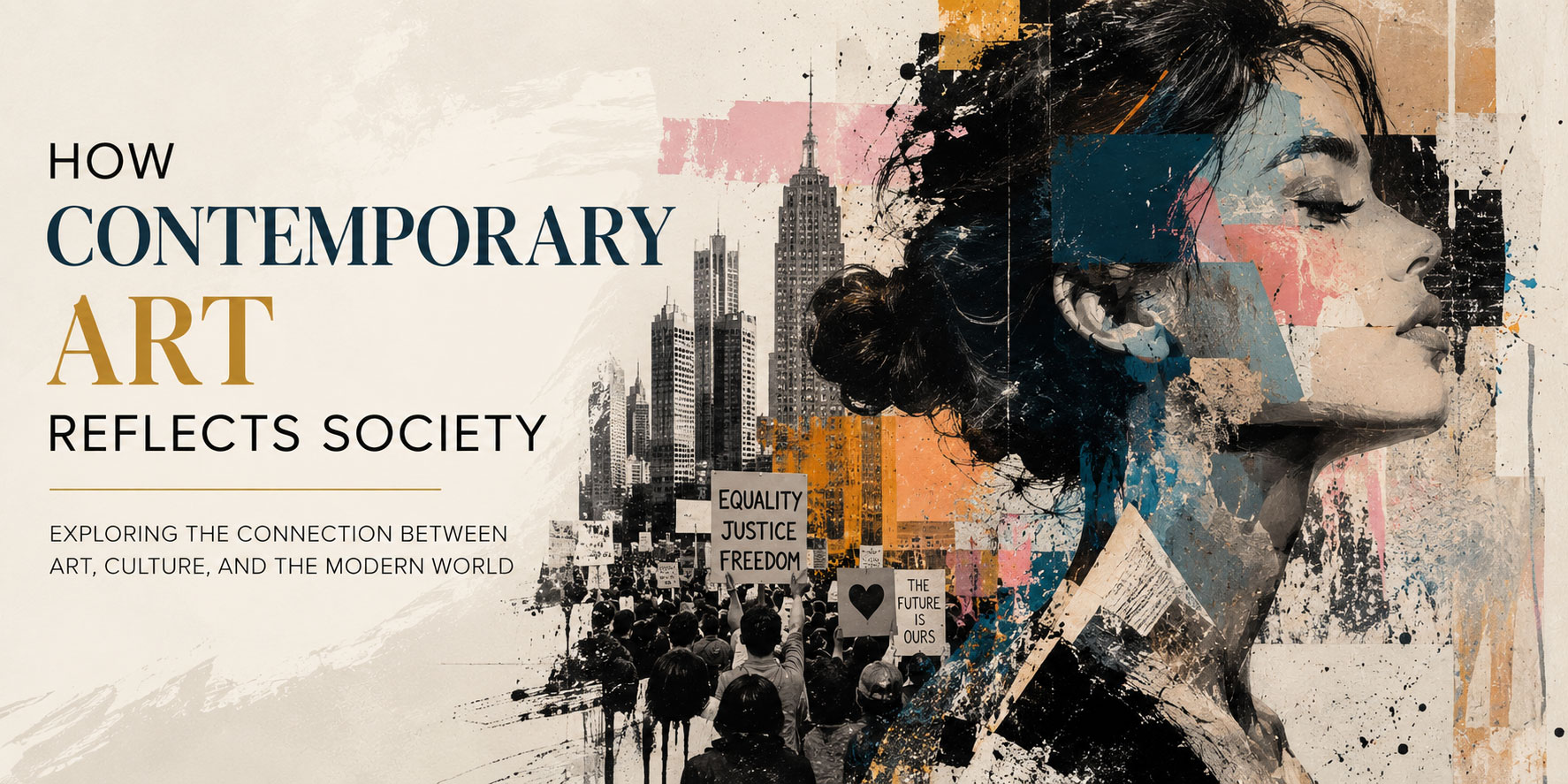
Art has always mirrored the world around us. From ancient cave paintings to Renaissance masterpieces and modern abstraction, artists have documented the beliefs, struggles, and aspirations of their time. Contemporary art continues this tradition, offering powerful visual responses to the social, cultural, political, and emotional realities of today’s world.
Unlike earlier artistic movements that often focused on beauty, religion, or historical events, contemporary art embraces complexity. It invites viewers to question, interpret, and engage with the issues shaping modern life.
Whether through painting, sculpture, photography, installation, or digital media, contemporary artists transform everyday experiences into visual conversations that resonate across cultures.
Why Contemporary Art Matters in Today’s Society
Society is constantly changing.
Technology evolves.
Cultures interact.
Political systems shift.
Environmental concerns grow.
Human identities become increasingly diverse.
Contemporary art captures these transformations in ways that statistics and news reports cannot. It communicates emotion, perspective, and experience through visual language.
Art becomes a record of our time.
Art as a Reflection of Human Experience
Every generation creates art that reflects its own realities.
Today’s artists explore themes including:
- Identity
- Migration
- Mental health
- Climate change
- Technology
- Equality
- Memory
- Community
- Isolation
- Hope
These themes are deeply connected to everyday life, making contemporary art both personal and universal.
Identity in Contemporary Art
One of the defining characteristics of contemporary art is its exploration of identity.
Artists ask questions such as:
Who are we?
Where do we belong?
How does culture shape us?
How do gender, ethnicity, language, and history influence personal identity?
Rather than providing fixed answers, contemporary artworks encourage viewers to reflect on their own experiences.
Identity has become one of the strongest voices in today’s artistic landscape.
Contemporary Art and Social Change
Throughout history, artists have documented moments of transformation.
Contemporary artists continue this tradition by addressing issues including:
- Human rights
- Equality
- Refugee experiences
- Social justice
- Diversity
- Freedom of expression
Art often becomes a peaceful but powerful form of activism.
Rather than delivering political speeches, artists communicate through symbolism, composition, color, and visual storytelling.
Technology Has Changed Contemporary Art
Digital technology has dramatically expanded artistic possibilities.
Today’s artists create work using:
- Digital painting
- Artificial intelligence
- Video installations
- Interactive experiences
- Virtual reality
- Projection mapping
Technology is no longer simply a tool—it has become both the subject and the medium of contemporary art.
Artists also explore how smartphones, social media, and constant connectivity influence modern relationships.
The Emotional Language of Contemporary Painting
Although contemporary art includes many media, painting remains one of its most expressive forms.
Color, texture, gesture, and composition communicate emotions that words often cannot.
A contemporary painting may represent joy, anxiety, nostalgia, resilience, or hope without depicting a recognizable scene.
This emotional openness allows every viewer to experience the artwork differently.
Environmental Awareness in Contemporary Art
Climate change has become one of the defining issues of the twenty-first century.
Many contemporary artists investigate humanity’s relationship with nature by exploring themes such as:
- Sustainability
- Pollution
- Biodiversity
- Water conservation
- Climate crisis
Some artists even create works using recycled materials, emphasizing environmental responsibility through both concept and process.
Diversity and Global Perspectives
Unlike previous centuries, contemporary art exists within a connected global community.
Artists collaborate across continents, cultures, and traditions.
This diversity enriches artistic practice by introducing new perspectives and encouraging cross-cultural dialogue.
As a result, contemporary art reflects not one society but many interconnected societies.
Why Contemporary Art Sometimes Feels Challenging
Many visitors ask why contemporary art can seem difficult to understand.
The answer lies in its purpose.
Rather than illustrating obvious stories, contemporary artists often encourage interpretation.
There is rarely one correct meaning.
Each viewer brings unique memories, emotions, and experiences that shape the way an artwork is understood.
This openness makes contemporary art deeply engaging.
Contemporary Art Creates Conversations
Unlike decorative art, contemporary art encourages discussion.
Visitors leave galleries asking questions:
“What does this mean?”
“Why did the artist choose these colors?”
“Why does this artwork make me uncomfortable?”
These conversations are an essential part of the artistic experience.
Art continues long after the viewer leaves the gallery.
The Role of Contemporary Galleries
Art galleries serve as bridges between artists and audiences.
They provide spaces where ideas, creativity, and dialogue come together.
Contemporary galleries help visitors discover emerging artists, experience original works, and understand the evolving language of visual culture.
For collectors, galleries also offer opportunities to invest in meaningful original artworks while supporting living artists.
Contemporary Art at Soheila Golestani Gallery
At Soheila Golestani Gallery, contemporary painting is approached as a visual dialogue between emotion, memory, identity, and lived experience.
Each original artwork invites viewers to engage personally with color, texture, and composition rather than searching for a single interpretation.
This philosophy reflects one of the central values of contemporary art: creating space for reflection, conversation, and emotional connection.
Through expressive paintings, the gallery celebrates the ability of art to communicate across cultures and generations while remaining deeply personal.
Frequently Asked Questions
How does contemporary art reflect society?
Contemporary art reflects society by exploring current issues such as identity, technology, equality, politics, culture, and environmental concerns through visual expression.
Why is contemporary art important today?
It documents the ideas, emotions, and challenges of modern life while encouraging critical thinking and cultural dialogue.
Does contemporary art always have a political message?
No. While some artists address political issues, many focus on personal emotions, memory, relationships, spirituality, or aesthetic exploration.
Why do people interpret contemporary art differently?
Contemporary artworks are intentionally open to interpretation, allowing viewers to connect through their own experiences and perspectives.
Can contemporary painting still be relevant in the digital age?
Absolutely. Painting continues to evolve by combining traditional techniques with modern concepts, making it one of the most significant forms of contemporary artistic expression.
Final Thoughts
Contemporary art reflects society because it grows directly from the world we inhabit. It records our changing identities, celebrates cultural diversity, questions established ideas, and gives visual form to the emotions and experiences that define modern life. As society continues to evolve, contemporary artists will remain essential voices in documenting these transformations. Visiting galleries, engaging with original paintings, and supporting living artists allows us to participate in this ongoing dialogue between art and society—one that continues to shape how we understand ourselves and the world around us.