
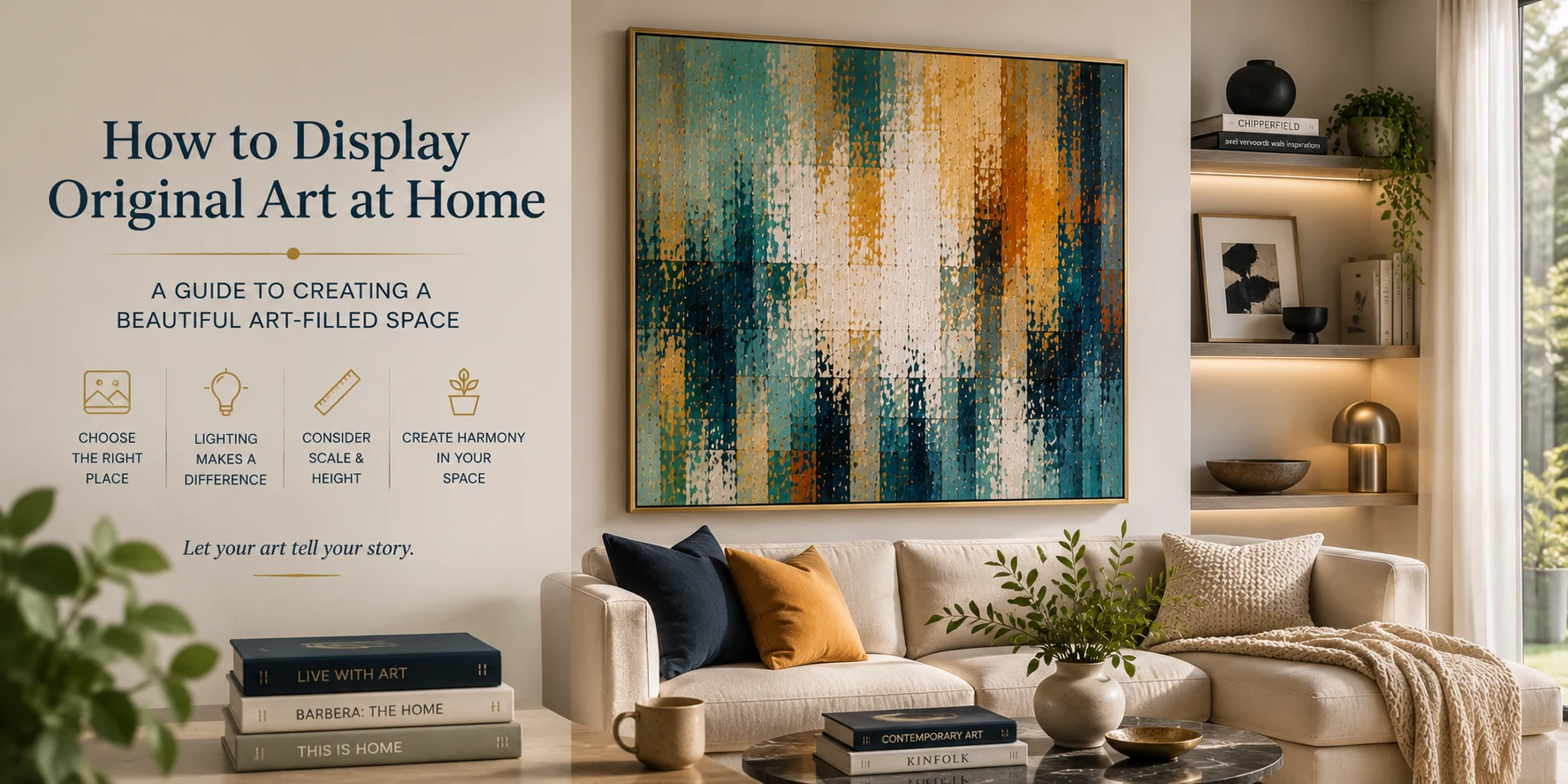
An original painting can completely transform the atmosphere of a home.
It can become the focal point of a living room, create a sense of calm in a bedroom, add personality to a hallway, or bring creativity into a home office. But choosing a beautiful painting is only the beginning. How you display the artwork can have just as much impact on how it is experienced.
The right placement, lighting, scale, framing, and surrounding space can allow an original painting to become an important part of your interior rather than simply another decorative object.
Whether you have recently purchased your first original painting or are building a larger art collection, this guide will help you understand how to display contemporary art at home and create a space where your artwork can truly be appreciated.
Why Original Art Matters in Interior Design
Original artwork adds something unique to an interior.
Furniture, lighting, and decorative objects can create a beautiful environment, but artwork introduces a personal and emotional dimension.
A painting can communicate something about the people who live in a home.
It can reflect their interests, memories, values, and personality.
Unlike mass-produced decorative images, an original painting has its own history and creative identity.
It represents the artist’s vision and becomes part of the collector’s personal story.
This is why original contemporary art can be such a powerful element of interior design.
Choose the Right Wall
Before hanging a painting, consider the wall where it will be displayed.
Look at the surrounding architecture and furniture.
Ask yourself:
- Is the wall large enough for the artwork?
- Is there enough visual space around the painting?
- Will furniture interfere with the artwork?
- Is the wall exposed to direct sunlight?
- Can the artwork be viewed comfortably from the main areas of the room?
A painting should have enough space to breathe.
If a wall is crowded with furniture, shelves, photographs, and decorations, an important artwork may lose its visual impact.
Sometimes the most effective way to display a painting is simply to give it space.
Consider the Size of the Artwork
Scale is one of the most important factors when displaying original art.
A very small painting can disappear on a large wall.
A very large painting can dominate a small room.
Before purchasing or hanging artwork, measure both the painting and the available wall space.
For artwork placed above a sofa, console table, or other large piece of furniture, the painting should generally relate proportionally to the furniture beneath it.
The goal is visual balance.
The artwork should feel connected to the surrounding space without becoming overwhelmed by it.
Hang Artwork at the Right Height
The height at which a painting is displayed can dramatically affect how comfortable it is to view.
A common guideline is to position the centre of the artwork around eye level.
However, there is no single rule that works for every room.
Furniture, ceiling height, the size of the painting, and the viewing distance all matter.
If a painting is placed above a sofa or console, the relationship between the artwork and furniture should also be considered.
The most important principle is that the artwork should feel naturally integrated into the room.
Give Your Artwork Breathing Room
One of the simplest ways to improve an art display is to avoid overcrowding.
A beautiful painting needs visual space around it.
Too many decorative objects can compete for attention.
If you want a particular painting to become the focal point of a room, reduce visual distractions around it.
This allows the viewer to concentrate on the artwork and appreciate its details.
Minimal surroundings can sometimes make a powerful painting feel even more dramatic.
Use Lighting to Enhance the Artwork
Lighting can completely change how a painting is experienced.
Natural daylight can reveal colours and textures beautifully, but direct sunlight can potentially damage certain artworks over time.
For valuable original paintings, prolonged exposure to strong direct sunlight should generally be avoided.
Artificial lighting can provide greater control.
Adjustable picture lights or carefully positioned directional lighting can highlight an artwork without illuminating the entire room.
When selecting lighting, consider:
- Colour temperature
- Brightness
- Direction
- Reflections
- Distance from the artwork
The goal is to make the painting visible without creating distracting glare.
Avoid Direct Sunlight
One of the most important considerations when displaying original paintings is protection from environmental conditions.
Strong direct sunlight can affect certain pigments and materials over long periods.
Whenever possible, avoid placing valuable artwork directly opposite large windows where intense sunlight reaches the painting for extended periods.
If necessary, curtains, blinds, UV-filtering window solutions, or alternative placement can help reduce exposure.
For specific artworks, always follow the conservation recommendations provided by the artist or gallery.
Choose the Right Frame
Framing can influence the visual relationship between a painting and its surroundings.
Some contemporary paintings look strongest with minimal framing.
Others benefit from a more substantial frame that creates a clear visual boundary.
When selecting a frame, consider:
- The artwork’s colours
- The painting’s style
- The architecture of the room
- Furniture
- Wall colour
- Your overall interior design
The frame should support the artwork rather than compete with it.
If you are uncertain, ask the artist or gallery for recommendations.
Displaying Art in the Living Room
The living room is often one of the best places to display a significant original painting.
A large contemporary artwork can become the central visual element of the space.
Popular locations include:
- Above a sofa
- Above a console
- On a large feature wall
- Beside a fireplace
- On an otherwise empty architectural wall
Instead of filling every wall, consider selecting one or two important artworks and allowing them to dominate the visual composition.
Displaying Art in the Bedroom
Bedrooms usually benefit from a calmer visual atmosphere.
Consider paintings with colours and compositions that create a feeling of relaxation.
Artwork can be positioned above the bed, on an adjacent wall, or opposite the main viewing area.
Soft abstract paintings can work particularly well when the goal is to create a peaceful environment.
However, personal preference should always come first.
If a bold and energetic painting makes you happy, there is no reason it cannot belong in your bedroom.
Displaying Art in a Home Office
A home office is an excellent environment for contemporary artwork.
Creative surroundings can influence how a space feels and may help create an inspiring atmosphere.
Consider placing an original painting where you can see it while working.
Abstract and expressive artwork can be particularly effective because it provides visual stimulation without necessarily demanding the same type of attention as text or screens.
Displaying Art in a Hallway
Hallways are often overlooked when planning an art collection.
Yet they can provide excellent opportunities for displaying smaller paintings or creating a sequence of artworks.
A hallway can become a private gallery within your home.
If you have several smaller original paintings, consider creating a carefully planned arrangement rather than placing them randomly.
Maintain consistent spacing and consider how the artworks relate to each other.
Creating an Art Wall
An art wall or gallery wall can be an effective way to display multiple artworks.
However, careful planning is important.
Before hanging anything, arrange the paintings on the floor.
Experiment with different compositions.
Consider:
- Size
- Colour
- Spacing
- Orientation
- Frames
- Visual balance
You can create a symmetrical arrangement or choose a more organic composition.
The important thing is that the individual works still have enough space to be appreciated.
Mixing Different Art Styles
Your home does not need to contain artwork from only one artistic style.
Contemporary paintings can work beautifully alongside photography, sculpture, traditional objects, or older artworks.
Contrast can make a collection more interesting.
For example, a bold abstract painting may create an exciting relationship with a quieter figurative artwork.
The key is to find a visual or conceptual connection between the pieces.
This might be colour, texture, theme, scale, or simply the way they make you feel.
Do Not Match Everything Too Perfectly
A common mistake in interior design is trying to make artwork match the room perfectly.
If your sofa is blue, you do not necessarily need a painting containing the exact same shade of blue.
Art can introduce contrast.
It can create tension.
It can bring unexpected colour into a neutral interior.
Sometimes the most memorable spaces are those where the artwork adds something unexpected.
Choose a painting because you love it first.
Then consider how it interacts with your environment.
Create a Conversation Between Artworks
If you own several paintings, think about how they communicate with each other.
They do not have to look identical.
Instead, look for relationships.
Perhaps two paintings share a similar colour palette.
Maybe they explore related themes.
Perhaps their textures contrast in an interesting way.
Creating these relationships can turn a group of individual paintings into a coherent collection.
Consider the View From Different Angles
Artwork is rarely viewed from a single position.
Walk around the room and observe the painting from different distances.
Look at it from the entrance.
View it while sitting on the sofa.
Observe it from across the room.
A painting can change dramatically depending on the distance from which it is experienced.
Large contemporary paintings often benefit from being viewed from further away, while smaller works invite closer observation.
Protect Your Original Artwork
Displaying art beautifully also means protecting it.
Keep artwork away from excessive humidity, extreme temperature changes, smoke, and other environmental hazards.
Avoid touching the painted surface unnecessarily.
When cleaning the surrounding area, make sure dust or cleaning products do not come into contact with the artwork.
If an artwork requires specialised conservation, consult a professional rather than attempting repairs yourself.
Let the Artwork Become Part of Your Life
One of the most beautiful things about owning original art is that you do not simply look at it once.
You live with it.
Over time, you may notice new details.
Your interpretation may change.
A painting that initially attracted you because of its colours may eventually become meaningful because of a memory associated with it.
This is one of the reasons original artwork can become such an important part of a home.
Displaying Original Contemporary Art by Soheila Golestani
The expressive nature of contemporary painting makes original artworks particularly versatile within modern interiors.
At Soheila Golestani Gallery, paintings explore emotion, colour, memory, identity, and human experience through an individual contemporary visual language.
Each original artwork can become a distinctive focal point within a home while also creating an opportunity for personal interpretation.
Whether displayed as a single statement piece or alongside other artworks, a painting by Soheila Golestani can bring colour, emotion, and artistic character into an interior.
For collectors, the process does not end when the artwork is purchased.
Choosing where and how to display it is another part of the relationship between collector, artwork, and artist.
Common Mistakes When Displaying Art at Home
Avoiding a few common mistakes can make a significant difference.
Hanging Artwork Too High
Artwork that is positioned too high can feel disconnected from the room.
Choosing Artwork That Is Too Small
A small painting on a very large wall can lose its impact.
Overcrowding the Wall
Too many objects can make individual artworks difficult to appreciate.
Ignoring Lighting
Poor lighting can hide colour, texture, and detail.
Exposing Artwork to Direct Sunlight
Long-term exposure can affect certain materials and pigments.
Matching Artwork Too Closely to the Interior
Art does not need to reproduce the colours of your furniture.
It should bring something distinctive to the space.
Frequently Asked Questions
How high should I hang a painting?
A useful starting point is to position the centre of the artwork around eye level. However, the ideal height depends on the room, furniture, artwork size, and viewing conditions.
Where is the best place to display an original painting?
Living rooms, bedrooms, home offices, hallways, dining rooms, and other spaces can all work well. The best location is one where the artwork can be comfortably viewed and appropriately protected.
Can I display original art in direct sunlight?
It is generally better to avoid prolonged direct sunlight because certain pigments and materials can be affected over time. Follow the artist or gallery’s specific conservation recommendations.
Should artwork match my furniture?
Not necessarily. Artwork can complement your interior without matching it exactly. Contrast can often create a more interesting and personal environment.
How do I create a gallery wall?
Start by measuring the available space and arranging your artworks on the floor before hanging them. Experiment with different layouts while considering size, spacing, colour, and framing.
Can I mix abstract and figurative paintings?
Absolutely. Combining different styles can create visual contrast and make a personal collection more dynamic.
Final Thoughts
Displaying original art at home is both a design decision and a personal experience.
The right painting can transform a room, but its placement, lighting, scale, and surroundings determine how effectively its beauty and character can be experienced.
Instead of treating artwork as an afterthought, give it the attention it deserves.
Allow it enough space.
Use appropriate lighting.
Protect it from harmful environmental conditions.
And most importantly, choose a location where you will enjoy seeing it every day.
An original painting can become much more than decoration. It can become a focal point, a conversation starter, a source of inspiration, and a meaningful part of your home’s identity. Whether you are displaying your first original painting or creating an extensive private collection, thoughtful presentation allows each artwork to tell its story and become part of your everyday life.