Contemporary art is constantly evolving, shaped by artists who challenge conventions, question society, and redefine creativity. Unlike previous art movements that followed recognizable styles, today’s artists work across a wide range of media, cultures, and concepts.
The most influential contemporary artists of the 21st century have transformed the global art landscape by exploring identity, politics, technology, memory, gender, and the human experience. Their work not only fills museums and galleries but also sparks conversations that extend far beyond the art world.
In this article, we explore some of the artists whose vision has had a lasting impact on contemporary art.
What Makes an Artist Influential?
Influence in contemporary art is not measured only by auction prices or museum exhibitions.
The world’s most influential artists often share several qualities:
- They introduce new artistic ideas.
- They inspire younger generations.
- They challenge social and cultural norms.
- They develop unique visual languages.
- Their work becomes part of global conversations.
Some artists influence through technical innovation, while others change the way audiences think about art itself.
1. Gerhard Richter
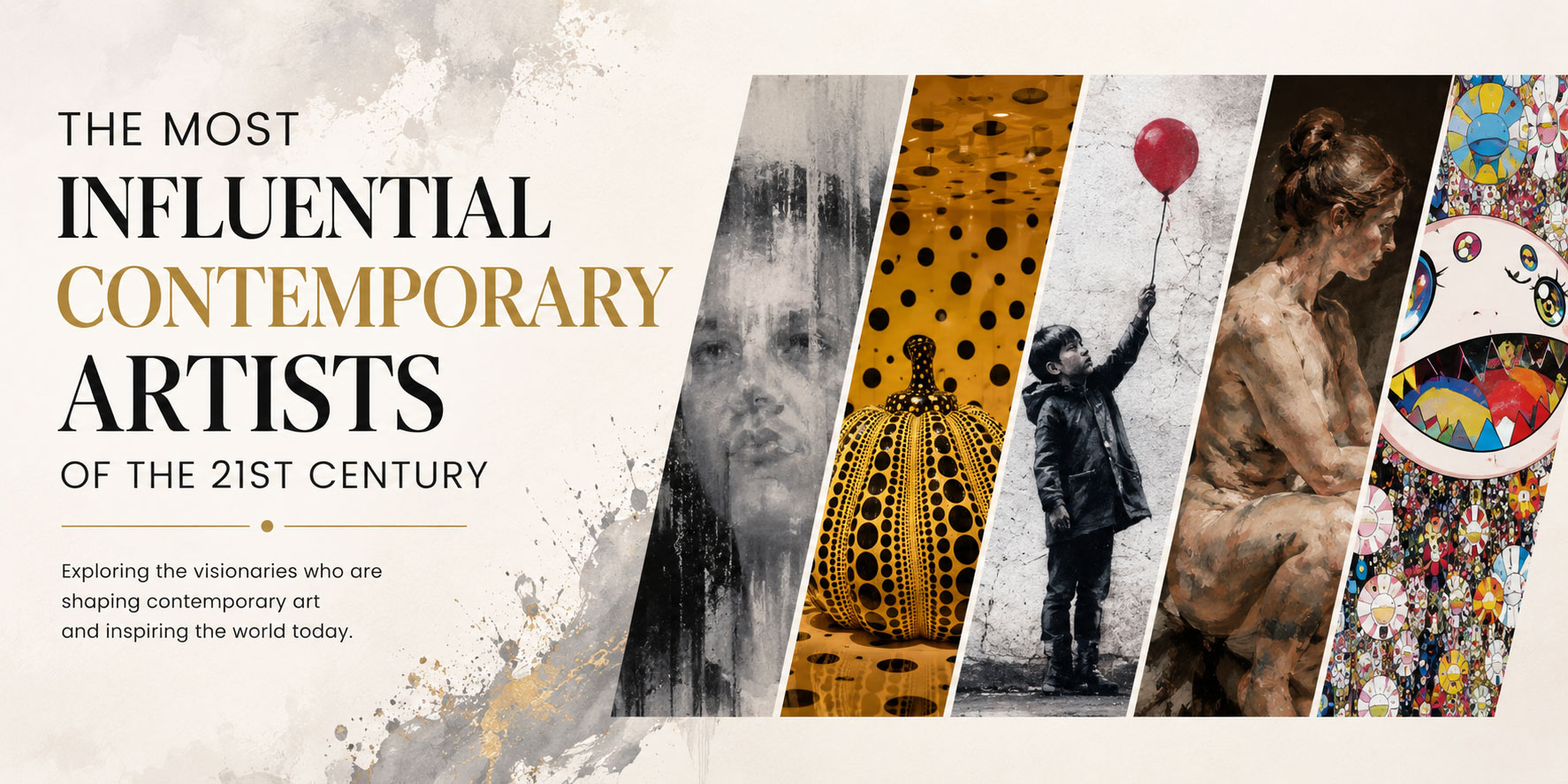
Although Gerhard Richter began his career decades ago, his influence remains exceptionally strong throughout the twenty-first century.
His work moves effortlessly between abstraction and realism, demonstrating that painting continues to evolve despite the rise of digital media.
Richter’s blurred portraits and abstract compositions have inspired countless contemporary painters around the world.
His ability to combine emotional depth with technical mastery has secured his place among history’s greatest living artists.
2. Yayoi Kusama
Few artists have become as internationally recognizable as Yayoi Kusama.
Her immersive installations filled with mirrors and polka dots have transformed the visitor into part of the artwork itself.
Themes of infinity, repetition, mental health, and personal experience define her artistic vision.
Kusama has shown that contemporary art can be both intellectually engaging and accessible to millions of visitors worldwide.
3. Ai Weiwei
Ai Weiwei demonstrates how contemporary art can become a powerful tool for political and social commentary.
Working across sculpture, architecture, photography, documentary filmmaking, and installation art, he addresses freedom of expression, human rights, migration, and censorship.
His work proves that art can influence public debate while remaining visually compelling.
4. Banksy
Despite remaining anonymous, Banksy has become one of the most famous contemporary artists in the world.
His street art combines humor, satire, and political criticism to question authority, capitalism, and war.
Banksy has helped elevate street art from an underground movement into one of the most respected forms of contemporary artistic practice.
5. Damien Hirst
Damien Hirst challenged traditional ideas about beauty, mortality, and value.
His conceptual works—including preserved animals, medicine cabinets, and large-scale installations—continue to provoke discussion.
Whether admired or criticized, Hirst has undeniably influenced contemporary art markets and conceptual practice.
6. Olafur Eliasson
Olafur Eliasson creates immersive environments that combine art, science, architecture, and nature.
Light, water, mirrors, fog, and movement become artistic materials that encourage audiences to experience space differently.
His installations remind viewers of humanity’s relationship with the natural world.
7. Cindy Sherman
Through photography, Cindy Sherman has transformed the way identity is represented in contemporary art.
By portraying countless fictional characters herself, she questions stereotypes surrounding gender, beauty, media, and representation.
Her work continues to influence photographers and visual artists internationally.
8. Jenny Saville
Jenny Saville has become one of the leading figures in contemporary figurative painting.
Her monumental portraits challenge conventional ideals of beauty while celebrating the complexity of the human body.
Her expressive brushwork has inspired a new generation of painters interested in realism, abstraction, and emotion.
9. Takashi Murakami
Murakami successfully bridges Japanese popular culture with fine art.
His colorful “Superflat” aesthetic combines anime, consumer culture, history, and traditional Japanese painting.
His collaborations with luxury fashion brands have expanded the audience for contemporary art.
10. Marina Abramović
Known as the pioneer of performance art, Marina Abramović explores endurance, vulnerability, trust, and human connection.
Her performances often place both artist and audience in emotionally intense situations, redefining the boundaries of artistic experience.
Common Characteristics of Influential Contemporary Artists
Although their artistic styles differ dramatically, these artists share important characteristics.
They Challenge Traditional Boundaries
They continually question what art can be.
They Tell Human Stories
Whether addressing politics or personal memories, their work speaks to universal human experiences.
They Experiment Fearlessly
Innovation remains central to contemporary artistic practice.
They Inspire Future Generations
Their influence extends beyond galleries into education, design, architecture, fashion, and digital culture.
Why Contemporary Artists Matter Today
Contemporary artists help us understand an increasingly complex world.
Their work reflects globalization, technological change, environmental concerns, migration, identity, and cultural diversity.
Rather than providing simple answers, contemporary artists invite viewers to think critically and engage emotionally.
Art becomes a conversation rather than an object.
Contemporary Painting Continues to Evolve
Painting remains one of the most powerful forms of artistic expression.
Today’s contemporary painters combine abstraction, symbolism, realism, and experimental techniques to communicate ideas that resonate with modern audiences.
Collectors increasingly value original paintings because they offer personal, emotional, and cultural significance beyond decoration.
Discover Contemporary Art at Soheila Golestani Gallery
While every influential artist develops a unique visual language, contemporary art continues to evolve through the voices of today’s emerging painters.
At Soheila Golestani Gallery, contemporary painting explores emotion, memory, identity, and the subtle relationship between color and human experience.
Original artworks invite viewers to pause, reflect, and create personal connections with each composition—an approach that lies at the heart of contemporary art.
Whether you are beginning your collection or expanding it, discovering the work of living artists offers an opportunity to engage with the creative conversations shaping our world today.
Frequently Asked Questions
Who is the most influential contemporary artist today?
There is no single answer. Artists such as Yayoi Kusama, Gerhard Richter, Ai Weiwei, Banksy, and Damien Hirst have each significantly influenced contemporary art in different ways.
What defines a contemporary artist?
A contemporary artist creates work that reflects today’s world through innovative ideas, modern techniques, and relevant cultural themes.
Why are contemporary artists important?
They challenge perspectives, inspire dialogue, document modern society, and influence future generations of artists.
Is contemporary art only found in museums?
No. Contemporary art is displayed in galleries, public spaces, private collections, digital platforms, and international art fairs.
How can I start collecting contemporary art?
Begin by visiting galleries, researching artists, understanding their creative vision, and purchasing original works that personally resonate with you.
Final Thoughts
The most influential contemporary artists of the twenty-first century remind us that art is constantly changing alongside society. Their work expands our understanding of creativity, identity, and culture while inspiring future generations of artists and collectors. As new voices continue to emerge, contemporary art remains one of the most dynamic and meaningful reflections of the world we live in. Exploring original works by living artists allows us to participate in this ongoing cultural conversation and discover perspectives that challenge, inspire, and endure.