
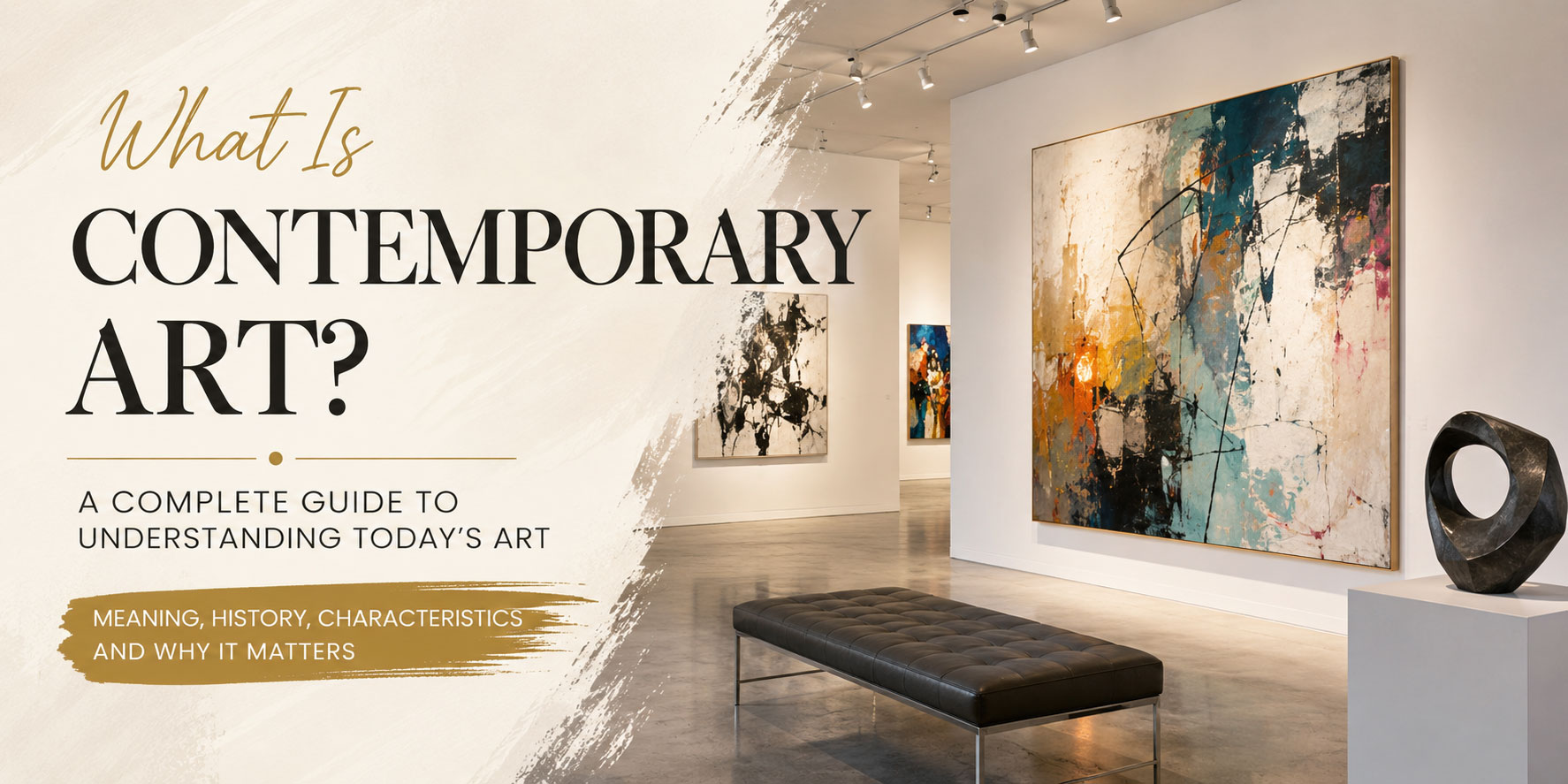
What Is Contemporary Art?
Contemporary art is one of the most discussed—and sometimes misunderstood—forms of artistic expression. Unlike traditional art movements that are confined to a particular historical period, contemporary art reflects the ideas, emotions, cultures, and challenges of the world we live in today.
Rather than following a single style or technique, contemporary artists explore diverse themes including identity, technology, social justice, environmental issues, memory, gender, and human emotions. This openness allows contemporary art to constantly evolve alongside society.
Whether displayed in galleries, museums, or public spaces, contemporary art encourages viewers to ask questions rather than search for fixed answers.
What Does Contemporary Art Mean?
The term Contemporary Art generally refers to artwork created from the late 20th century to the present day. It represents art made by living artists who respond to current events, cultural shifts, and personal experiences.
Unlike historical movements such as Renaissance, Baroque, or Impressionism, contemporary art does not follow one set of rules. Instead, artists have complete freedom to experiment with materials, concepts, and techniques.
Today, contemporary art includes:
- Painting
- Sculpture
- Photography
- Installation Art
- Digital Art
- Video Art
- Mixed Media
- Performance Art
This diversity is one of its defining strengths.
The Difference Between Modern Art and Contemporary Art
One of the most common misconceptions is confusing modern art with contemporary art.
Modern Art refers to artistic movements that developed roughly between the 1860s and the 1970s, including Cubism, Surrealism, Abstract Expressionism, and Pop Art.
Contemporary Art, on the other hand, represents the art being created today.
The key difference lies in perspective.
Modern artists challenged traditional artistic rules.
Contemporary artists often challenge ideas, society, identity, and even the definition of art itself.
Characteristics of Contemporary Art
Although contemporary art has no strict rules, several characteristics appear frequently across different artists and movements.
1. Freedom of Expression
Artists are free to develop their own visual language without following traditional conventions.
2. Concept Over Technique
Many contemporary artworks prioritize ideas over technical perfection. The meaning behind the artwork often becomes as important as its visual appearance.
3. Multiple Mediums
Contemporary artists combine painting, photography, digital technology, sculpture, and found objects to create unique experiences.
4. Social and Cultural Commentary
Many works respond directly to current global issues such as climate change, migration, politics, identity, or inequality.
5. Audience Interaction
Some contemporary artworks invite viewers to become active participants rather than passive observers.
Why Is Contemporary Art Important?
Contemporary art reflects the complexities of modern life.
It documents our fears, hopes, cultural diversity, technological advances, and changing values.
Artists help society understand difficult subjects by presenting them in visual forms that inspire conversation.
Art becomes more than decoration—it becomes a dialogue.
This is why contemporary art continues to play a vital role in museums, galleries, educational institutions, and public spaces worldwide.
Common Themes in Contemporary Art
While every artist develops a unique voice, certain themes appear repeatedly across contemporary practice.
Identity
Questions about personal identity, gender, ethnicity, and cultural heritage are central to many contemporary artists.
Memory
Artists often explore personal histories and collective memory through symbolism and abstraction.
Nature and Environment
Climate change and environmental responsibility have become increasingly significant subjects.
Technology
Artificial intelligence, social media, and digital life continue to reshape artistic expression.
Human Emotion
Love, loneliness, hope, anxiety, resilience, and transformation remain timeless subjects interpreted through contemporary perspectives.
Contemporary Painting Today
Painting remains one of the strongest mediums in contemporary art despite the rise of digital technologies.
Today’s contemporary painters often combine abstract elements with figurative imagery, symbolism, texture, and expressive color palettes to communicate emotional experiences.
Many artists blend traditional painting techniques with modern concepts, creating works that connect personal narratives with universal themes.
The Role of Women in Contemporary Art
Women artists have become increasingly influential in shaping the contemporary art landscape.
Their work expands conversations around identity, equality, family, migration, memory, and social change.
Today, collectors, museums, and international galleries continue to recognize the important contributions made by female contemporary artists across the world.
Contemporary Art at Soheila Golestani Gallery
At Soheila Golestani Gallery, contemporary painting is viewed as a dialogue between emotion, memory, and human experience.
Through expressive compositions, layered textures, and thoughtful use of color, Soheila Golestani explores themes that resonate with modern audiences while maintaining a deeply personal artistic language.
Each artwork invites viewers to pause, reflect, and discover their own interpretations—an essential quality of contemporary art itself.
Whether you are an experienced collector or someone beginning your journey into contemporary art, exploring original paintings offers an opportunity to engage with ideas that extend beyond the canvas.
Frequently Asked Questions
What is contemporary art?
Contemporary art refers to artwork created by living artists from the late twentieth century to today, reflecting current ideas, cultures, and social issues.
What is the difference between modern and contemporary art?
Modern art belongs to a historical period (approximately 1860–1970), while contemporary art refers to art created in the present day.
Why is contemporary art sometimes difficult to understand?
Many contemporary artists prioritize concepts and ideas over realistic representation, encouraging viewers to interpret the work personally rather than seeking one correct meaning.
Is contemporary art only abstract?
No. Contemporary art includes abstract, figurative, conceptual, digital, photographic, and many other artistic approaches.
Why should people collect contemporary art?
Collecting contemporary art supports living artists, enriches personal spaces with meaningful works, and allows collectors to connect with the cultural conversations of our time.
Final Thoughts
Contemporary art is more than a style—it is a reflection of our evolving world. It embraces diversity, innovation, and freedom of expression while inviting audiences to think, question, and connect through visual language. As society continues to change, contemporary art will remain one of the most powerful ways to document human experience and inspire meaningful dialogue across cultures and generations.